


Steam Boiler Water Treatment: A Guide for Canadian Commercial and Institutional Facilities
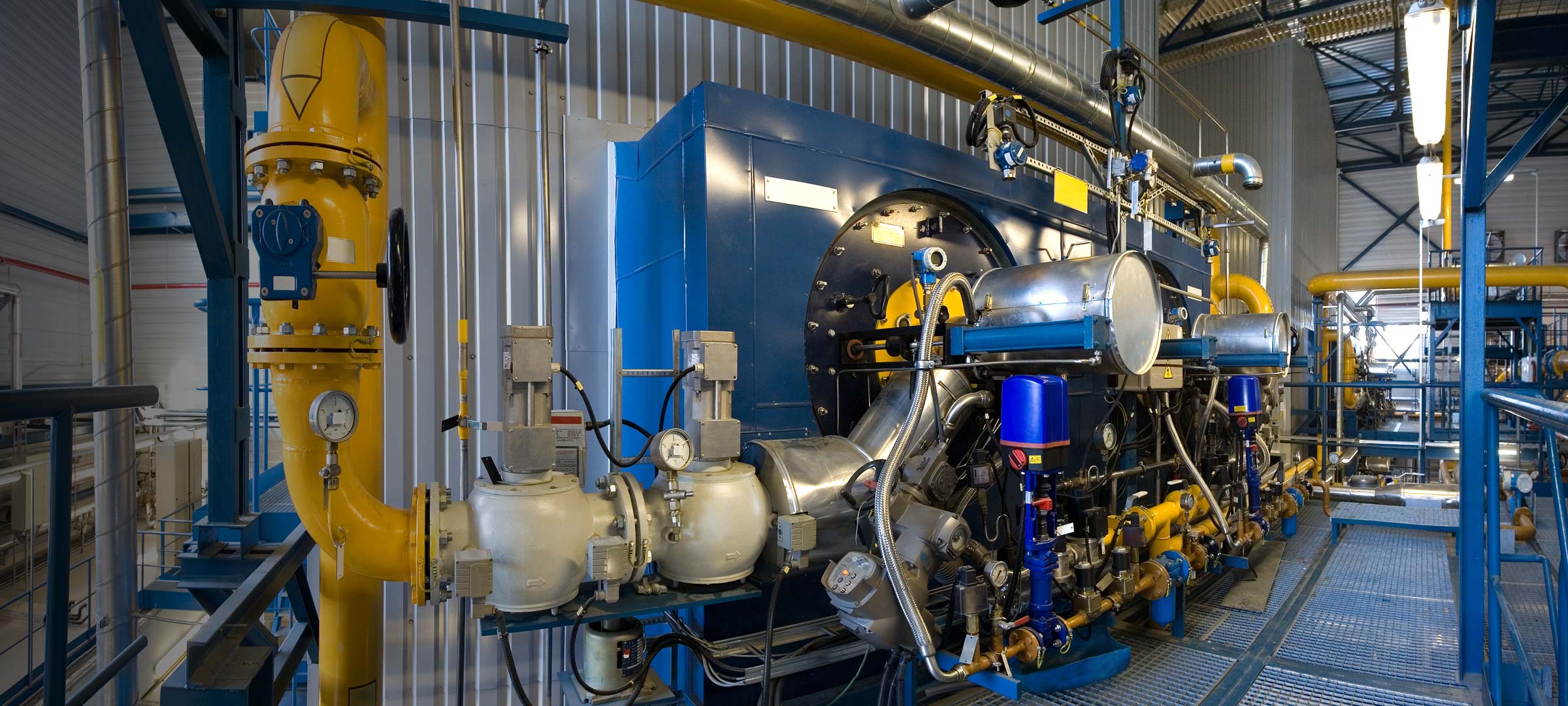
Quick answer: A steam boiler program limits four problems: scale, oxygen pitting, condensate line corrosion and carryover. It combines softened makeup water, oxygen removal, treatment chemicals, blowdown and regular testing.
Steam boilers serve hospitals, universities, schools, laundries, food plants and older downtown office buildings across Canada. They run on the same physics everywhere: water is boiled off as steam, the minerals and gases it carried are left behind or released, and the boiler concentrates whatever is not removed. Treatment exists to manage what gets left behind.
This guide covers what a program for a commercial or institutional steam boiler includes, which chemicals are used and why, how blowdown works, and what control ranges look like for a typical low-pressure fire-tube boiler. October is when most of these boilers come back online after summer layup, so it also covers layup and startup.
What does a steam boiler water treatment program include?
A steam boiler program has seven parts. Each one addresses a specific way the boiler or its steam system can fail.
- Makeup water pre-treatment: a softener, and sometimes reverse osmosis, to remove hardness before the water enters the system. Our article on hard water in Canadian cities covers pre-treatment choices in detail.
- Oxygen removal: a deaerator or a hot feedwater tank, plus a chemical oxygen scavenger, to remove the dissolved oxygen that causes pitting.
- Internal treatment: chemicals in the boiler water that keep residual hardness and iron from depositing on the tubes.
- Condensate treatment: amines that raise condensate pH or form a protective film, to slow carbonic acid corrosion in return lines.
- Blowdown: removal of concentrated boiler water to hold dissolved solids and sludge within limits.
- Testing and records: daily operator tests, regular service visits, and documented results against the program’s control ranges.
- Layup and startup procedures: protection for the boiler while it sits idle, and a checked return to service.
How does scale affect boiler efficiency and fuel cost?
Scale insulates the tube surface, so less heat from the burner reaches the water. The U.S. Department of Energy’s Steam Tip Sheet #7 puts fuel waste from scale at about 2% in water-tube boilers and up to 5% in fire-tube boilers, with a scale layer of 1/32 of an inch causing roughly a 2% loss. A plant that spends $150,000 a year on natural gas loses $3,000 to $7,500 a year to scale of that kind.
Fuel is the smaller cost. Scale also lets the tube metal run hotter than designed, because the water can no longer carry heat away from it. Overheated tubes bulge, crack and fail, and in a fire-tube boiler a failed tube means an unplanned shutdown in the middle of the heating season.
Calcium and magnesium cause most boiler scale, which is why softened makeup water comes first. Silica and iron can also form deposits. Iron usually comes from corrosion elsewhere in the system, most often the condensate lines, which ties the scale problem back to condensate treatment.
What chemicals are used in steam boiler water treatment and what does each do?
Programs vary by boiler pressure, makeup water and steam use, but most commercial and institutional programs draw on the chemicals below.
| Chemical | What it does | Where it is fed |
|---|---|---|
| Sodium sulfite (often catalyzed) | Reacts with dissolved oxygen to remove it before it can pit the metal | Feedwater tank or deaerator storage section |
| Phosphonates, polymers and chelants | Keep residual hardness and iron suspended or dissolved so they leave with blowdown instead of depositing. Many programs now rely on these, including all-polymer treatments that have replaced phosphate | Feedwater |
| Tannins | A newer option that is more forgiving and can handle system and chemistry upsets, which matters where boiler operators have multiple duties | Feedwater or boiler |
| Phosphate | Reacts with residual hardness to form a soft sludge that bottom blowdown removes, instead of hard scale. No longer used extensively, but still found in some programs | Boiler |
| Caustic soda | Holds boiler water alkalinity and pH in the range where steel corrodes least | Boiler or feedwater |
| Neutralizing amines | Travel with the steam and raise condensate pH, which slows carbonic acid corrosion | Feedwater or steam header |
| Film-forming amines | Form a thin protective film on the inside of condensate piping | Steam header |
| Antifoam | Reduces foaming that can carry boiler water into the steam | Boiler |
Where steam touches food, or is used for humidification in occupied spaces, chemical selection has extra limits. The program has to use products acceptable for that use, and some facilities restrict amines in humidification steam altogether. Tell your water treatment provider where every branch of your steam goes.
How do I reduce oxygen pitting in a steam boiler?
Oxygen corrosion forms deep, localized pits instead of even metal loss, so it can perforate a tube or feedwater line while the rest of the metal looks sound. Cold makeup water carries the most dissolved oxygen. Heating the feedwater drives oxygen out: a deaerator removes nearly all of it, and a feedwater tank held at a high temperature removes much of it. The oxygen scavenger then removes what remains.
The program’s test for scavenger residual in the boiler water is the check that this is working. A residual that drops to zero means oxygen is consuming the scavenger faster than it is fed. Common causes are a feedwater tank running cooler than intended, a failing deaerator, or a sudden rise in cold makeup because condensate has stopped returning.
How do I reduce condensate line corrosion in a steam system?
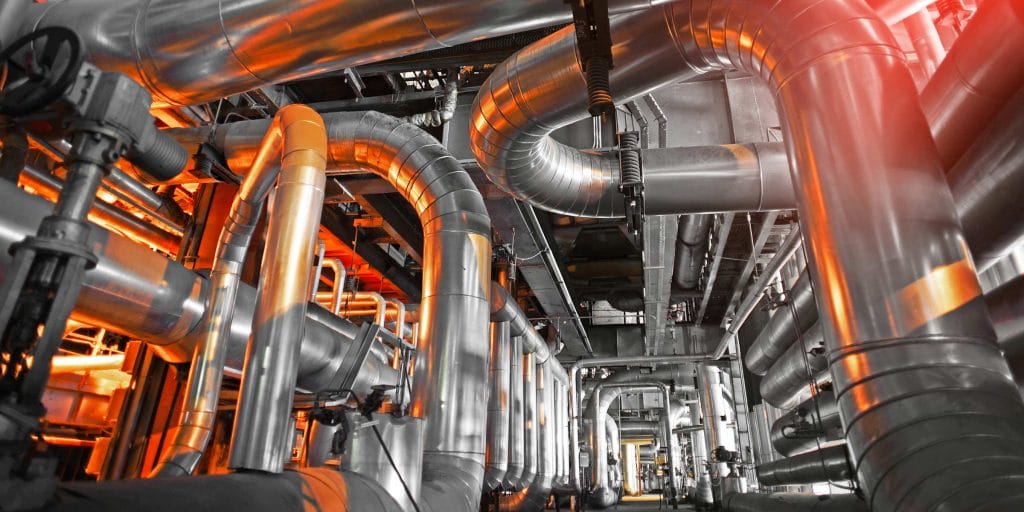
Bicarbonate and carbonate alkalinity in the makeup water break down in the boiler and release carbon dioxide. The carbon dioxide leaves with the steam and dissolves in the condensate, forming carbonic acid. The acid thins the bottom of horizontal condensate pipes and attacks threaded joints. The iron it dissolves returns to the boiler and adds to deposits there.
Four measures reduce it:
- Neutralizing amines raise condensate pH. The blend is matched to the length and layout of the condensate system, because different amines condense out at different points.
- Film-forming amines put a barrier between the condensate and the pipe wall. They are often used in long or complex systems.
- Lower makeup alkalinity means less carbon dioxide to begin with. Reverse osmosis or a dealkalizer does this at the source.
- More condensate return means less fresh makeup, and so less alkalinity entering the boiler. Condensate is hot, already treated water, and every litre returned saves water, chemistry and fuel.
Condensate pH and iron are the two tests to watch. Iron that trends upward over several visits points to corrosion somewhere upstream of the sample point.
What is boiler blowdown and how often should it be done?
Blowdown removes concentrated water from the boiler and replaces it with fresh feedwater. Boilers use two kinds:
- Surface or continuous blowdown draws water from just below the water surface to hold total dissolved solids (TDS) within the program’s limit. On most modern systems a conductivity controller opens the valve automatically.
- Bottom blowdown is a short, manual purge from the lowest point of the boiler to remove settled sludge. Its frequency follows the boiler manufacturer’s instructions and the sludge load, which depends on makeup water quality and the treatment chemistry.
Too little blowdown lets dissolved solids climb, which leads to deposits and carryover. Too much wastes water, chemicals and the fuel already spent heating that water. A conductivity-controlled surface blowdown, set against a measured TDS limit, avoids both. In larger plants, a flash tank or heat exchanger can recover heat from the blowdown stream.
What causes carryover, and why does it matter?
Carryover is boiler water leaving with the steam, as droplets or foam. It carries dissolved solids and treatment chemicals into the steam lines, where they deposit in valves, traps, heat exchangers and humidifiers. In a process plant, it can contaminate the product the steam touches.
High TDS, high alkalinity, oil or organic contamination, a water level set too high and sudden steam demand all make carryover more likely. Holding TDS within limits through blowdown is the main remedy, with antifoam where the water chemistry calls for it.
Typical control ranges for a low-pressure fire-tube steam boiler
Every program sets its own control ranges, based on the boiler manufacturer’s requirements, operating pressure, makeup water and the chemistry in use. The ranges below are an example for a low-pressure fire-tube boiler on softened makeup water with a sulfite and phosphate program, and they show the kind of targets a program should document. Phosphonate, all-polymer and tannin programs use their own targets in place of the phosphate line.
| Parameter | Sample point | Typical range | Why it is tested |
|---|---|---|---|
| Total hardness | Softener outlet or feedwater | Below 1 mg/L as CaCO3 | Confirms the softener is working and not exhausted |
| pH | Boiler water | 10.5 to 11.5 | Steel corrodes least in this range |
| Sulfite | Boiler water | 20 to 40 mg/L as SO3 | Confirms oxygen scavenger is present in excess |
| Phosphate | Boiler water | 30 to 60 mg/L as PO4 | Confirms enough treatment to condition residual hardness |
| Total dissolved solids | Boiler water | Below the manufacturer’s limit, commonly 3,500 mg/L or less | Sets blowdown and limits carryover |
| pH | Condensate | 8.0 to 9.0 | Confirms amine treatment is reaching the return lines |
| Iron | Condensate | Trended over time | Rising iron points to corrosion upstream |
Typical values for illustration. Your program’s control ranges should be set in writing for your boiler and reviewed when conditions change.
Summer layup and fall startup
A boiler that sits idle through the summer can corrode faster than one in service. Wet idle boilers take on oxygen, and drained boilers left damp corrode wherever moisture collects. The two accepted approaches are:
- Wet layup: the boiler is filled to the top, with scavenger and pH raised above normal operating levels, and checked periodically.
- Dry layup: the boiler is drained, cleaned, dried thoroughly and sealed, often with a desiccant inside.
Problems from a poor layup show up at startup. Rust-coloured water, unusual sludge in the first bottom blowdowns and a condensate iron spike are the common signs. A startup check before the heating season, covering the softener, chemical feed equipment, blowdown controls and a full set of water tests, finds most of these before they reach the boiler tubes. Pace’s plant shutdown services cover inspection and cleaning during the off-season.
What should a boiler water treatment program include for a hospital or school?
Hospitals and healthcare facilities
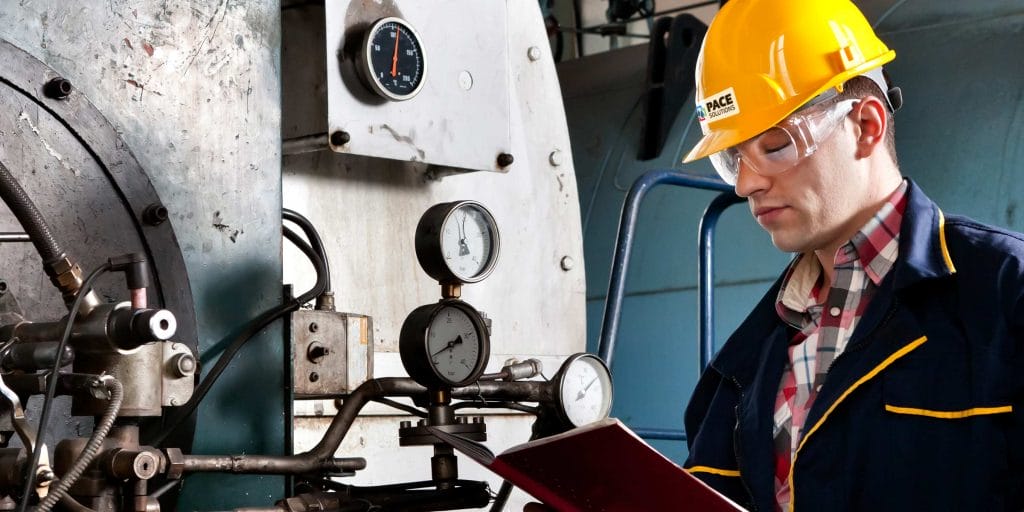
Hospitals use steam for heating, sterilization, humidification and food service, often from the same plant. The program has to account for every one of those uses: steam purity for sterilizers, amine choices for humidification steam, and redundancy, because a hospital cannot take its only boiler offline for repairs. Documentation matters as much as chemistry. Accreditation and insurance reviews look for a written program, defined control ranges and a record of every result and corrective action.
Schools and school districts
Schools often run older low-pressure steam systems with long condensate runs and limited on-site staff. The boilers sit idle every summer, which makes layup and startup procedures central to the program. Long condensate lines in older buildings lose condensate to failed traps and leaks, which raises makeup water use and corrosion. Remote monitoring, such as Pace RemoteLink™, lets a small facilities team see conductivity and chemical feed across several buildings without a site visit to each.
In both settings, operators typically log daily tests while the treatment provider reviews results and adjusts the program at each service visit. Pace e-Service Reporting keeps that record in one place for facility managers, auditors and insurers.
Frequently Asked Questions
Is a water softener enough to protect a steam boiler?
A softener removes the hardness that causes most scale, but it does nothing about dissolved oxygen, alkalinity or dissolved solids. A steam boiler on softened water still needs oxygen scavenging, internal treatment, condensate treatment and controlled blowdown.
Do low-pressure steam heating boilers need chemical treatment?
Yes. Low-pressure boilers face the same scale, oxygen and condensate corrosion problems as high-pressure boilers, at a slower rate. Many institutional heating plants run low-pressure steam, and their condensate systems are often old and long, which makes condensate treatment especially important.
How often should steam boiler water be tested?
Operators typically test boiler water, feedwater hardness and condensate daily or once per shift, depending on the size of the plant and provincial requirements. The water treatment provider should review those logs and run a full set of tests at each service visit.
What is the difference between steam boiler and hot water boiler treatment?
A steam boiler boils water away, so it concentrates minerals and needs constant makeup water, blowdown and condensate treatment. A hot water boiler is part of a closed loop that recirculates the same water, so treatment focuses on corrosion inhibitors held at a stable level. See our closed-loop treatment page for hot water systems.
Why does condensate return matter?
Returned condensate is hot, low in minerals and already treated. Every litre returned is a litre of makeup water that does not need softening, heating from cold or scavenging. Low condensate return raises water, chemical and fuel costs, and often points to failed traps or leaking return lines.
Pace designs steam boiler programs around each plant’s makeup water, steam uses and staffing, backed by the largest team of Certified Water Technologists in Canada. Learn more about our steam boiler treatment program or contact your regional Pace representative to book a boiler assessment before the heating season.


