
Hard Water in Canadian Cities: What It Does to Boilers, Chillers and Cooling Towers, and When Commercial Pre-Treatment Pays Off
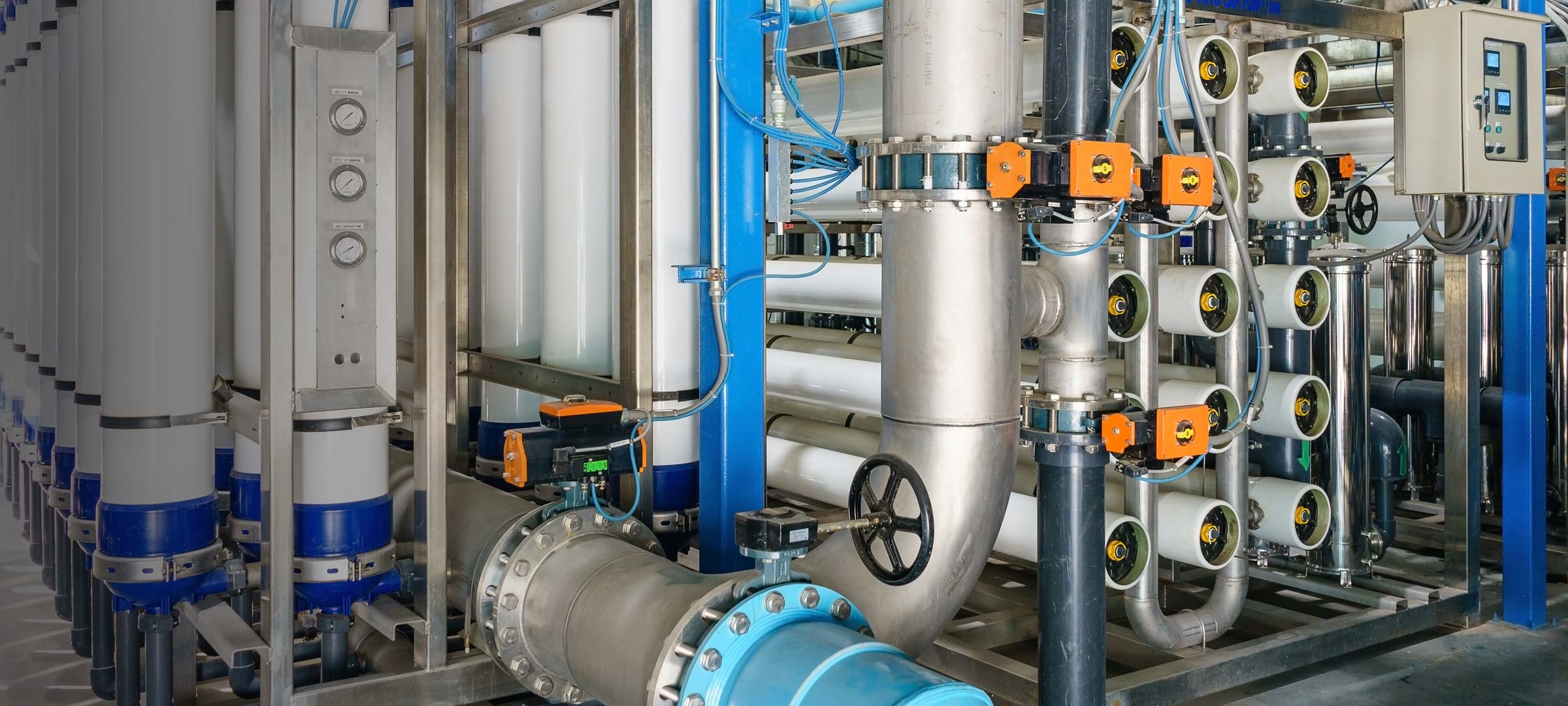
Quick answer: Canadian city water runs from very soft (Victoria, about 17 mg/L) to very hard (parts of Calgary, over 270 mg/L). Hard water scales boilers and cooling towers, so steam boilers need softened makeup water.
Hardness is the amount of dissolved calcium and magnesium in water, reported in milligrams per litre as calcium carbonate (mg/L as CaCO3). Municipal treatment plants make water safe to drink, and water that meets every drinking water guideline can still leave a layer of scale on a boiler tube within one heating season.
This article gives the published hardness for each city Pace serves, explains what that hardness does to heating and cooling equipment, and sets out when a commercial softener, reverse osmosis or filtration system is worth the cost.
How hard is the water in Canadian cities?
The figures below come from each utility’s most recent public water quality report. The classification follows the ranges Health Canada cites in its operational guidance: soft below 60 mg/L, moderately hard from 60 to 120, hard from 120 to 180, and very hard above 180.
| City | Water source | Hardness (mg/L as CaCO3) | Classification |
|---|---|---|---|
| Vancouver | Capilano, Seymour and Coquitlam reservoirs | About 20 (treated, 2025) | Soft |
| Victoria | Sooke Lake Reservoir | 17 (median) | Soft |
| Calgary | Bow River (Bearspaw plant) and Elbow River (Glenmore plant) | 141 to 274 (2025, varies by plant and season) | Hard to very hard |
| Edmonton | North Saskatchewan River | About 175 (2025) | Hard |
| Regina | Buffalo Pound Lake | 208 (2024) | Very hard |
| Saskatoon | South Saskatchewan River | About 160 (after lime softening at the plant) | Hard |
| Winnipeg | Shoal Lake | About 80 (2024 average) | Moderately hard |
| Toronto | Lake Ontario | 119 (2025 average) | Moderately hard |
| Montreal | St. Lawrence River | About 116 (Atwater and Charles-J.-Des Baillets plants) | Moderately hard |
Sources: Metro Vancouver 2025 Water Quality Annual Report; Capital Regional District; City of Calgary 2025 water quality data; EPCOR Edmonton monthly report, January 2025; City of Regina 2024 Drinking Water Quality Report; City of Saskatoon; City of Winnipeg 2024 treated water results; City of Toronto 2025 Drinking Water Analysis Summary; Ville de Montréal.
Two cautions apply to any table like this. First, hardness moves with the seasons. Calgary’s Glenmore plant reported 208 to 274 mg/L in the first quarter of 2025 and 191 to 216 mg/L in the third, because spring runoff dilutes the rivers. Second, a building fed by a private well, or by a smaller municipal system outside these cities, can be far harder. Some well water in Canada exceeds 700 mg/L. The only reliable number for a given building is a test of its own makeup water.
What does hard water do to a boiler, chiller or cooling tower?
Calcium carbonate becomes less soluble as water gets hotter. That is the opposite of most minerals, and it means scale forms first on the hottest surfaces in a building: boiler tubes, heat exchanger plates and water heater elements. Each piece of equipment meets the problem in a different way.
Steam boilers
A steam boiler boils water away and leaves the minerals behind. Every litre of makeup water adds its full load of calcium and magnesium to the boiler, and the concentration rises until blowdown removes it. In Regina, a steam plant with no softener would add about 208 mg of hardness to the boiler for every litre of makeup. The scale that forms insulates the tubes, so the burner has to fire longer for the same steam output, and the metal under the scale runs hotter than it was designed to.
Cooling towers and chillers
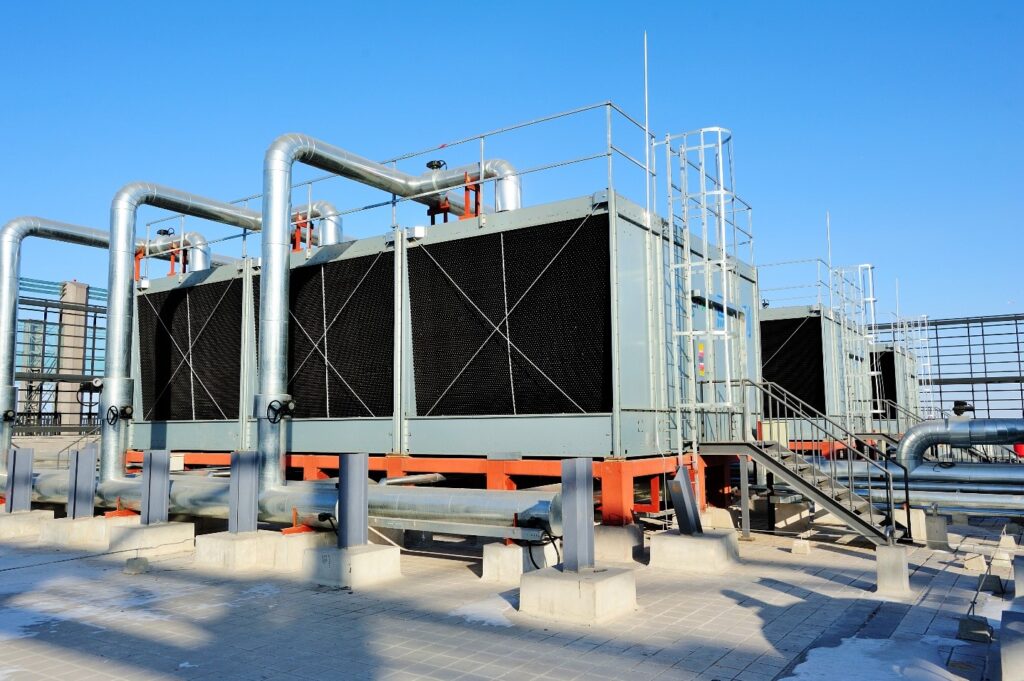
A cooling tower cools water by evaporating part of it. Evaporation removes pure water and leaves the minerals in the basin, so the circulating water becomes several times harder than the makeup. The ratio is called cycles of concentration. At four cycles, Edmonton makeup water at 175 mg/L becomes about 700 mg/L in the tower. That water passes through the chiller condenser, and scale on the condenser tubes raises the refrigerant condensing pressure, which makes the compressor work harder.
Closed-loop heating and chilled water systems
A closed loop recirculates water with little routine makeup and does not concentrate dissolved minerals through evaporation as a cooling tower does. Scale potential depends on the fill water quality, operating temperature and system conditions, while corrosion is often the greater concern. Frequent top ups indicate water loss that should be investigated. Replacement water introduces dissolved oxygen and dilutes the corrosion inhibitor, increasing the need for monitoring and treatment adjustment.
Soft water has its own problem
Vancouver and Victoria water carries almost no calcium or magnesium. It forms very little scale, but it is more aggressive toward copper and steel, because it lacks the thin mineral film that harder water deposits on pipe walls. Metro Vancouver adjusts pH and alkalinity at its treatment plants to reduce corrosion for this reason. Buildings on soft water still need a treatment program. The program puts more weight on corrosion inhibitors and less on scale inhibitors.
What water hardness level causes scale in commercial boilers and cooling towers?
No single hardness number marks the point where scale starts. Whether water scales depends on its hardness, alkalinity, pH and temperature together, and on how many times the system concentrates it. Treatment programs use saturation indices, such as the Langelier and Ryznar indices, to predict scaling from all of those values at once.
For practical purposes, the answer differs by equipment:
- Steam boilers: makeup water is softened to as close to zero hardness as the equipment allows, in every city on the table above. Even Toronto and Montreal water, at about 120 mg/L, will scale a steam boiler that is fed without softening.
- Cooling towers: the treatment program sets a maximum number of cycles for the makeup water quality. Harder makeup water means fewer cycles, more blowdown and more chemistry. A Calgary tower might run at three cycles on untreated makeup where a Vancouver tower runs at eight or more.
- Domestic hot water heaters: scale builds on elements and in tanks in hard-water cities, and faster at higher storage temperatures. Treatment options include softening and film-forming products such as Parafos®.
How much energy does scale cost in a boiler or chiller?
The U.S. Department of Energy’s Steam Tip Sheet #7 estimates fuel waste from boiler scale at about 2% in water-tube boilers and up to 5% in fire-tube boilers. Its table shows scale of ordinary composition, 1/32 of an inch thick, causing about a 2% fuel loss, and thicker or iron-rich scale causing more. For a boiler plant that burns $150,000 of natural gas a year, 2% is $3,000 and 5% is $7,500, every year the scale stays in place.
Chiller losses follow the same principle. Scale on condenser tubes raises the temperature at which refrigerant condenses, and each degree adds compressor energy. The size of the loss depends on the chiller, its load and the scale. Our article on how water treatment reduces energy costs covers the energy side in more detail.
Does a commercial building need a water softener or reverse osmosis?
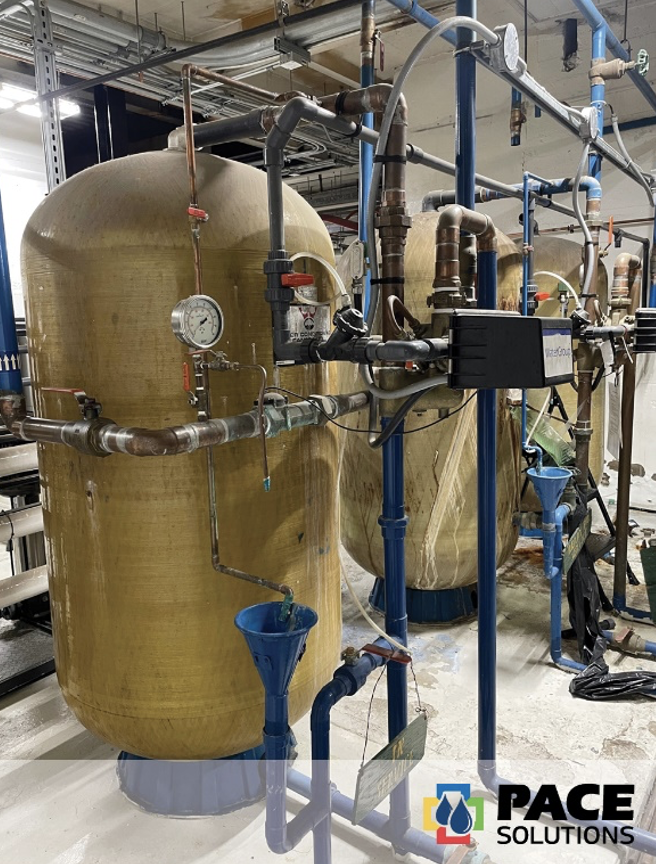
It depends on which systems the water feeds and how much of it they use. Each pre-treatment technology removes something different:
| Equipment | What it removes | Typical commercial use |
|---|---|---|
| Ion exchange water softener | Calcium and magnesium, exchanged for sodium. Does not reduce total dissolved solids or alkalinity. | Steam boiler makeup, cooling tower makeup using a controlled blend of softened and unsoftened water where hardness warrants it, humidifiers and commercial kitchens |
| Reverse osmosis (RO) | Most dissolved solids, including hardness, alkalinity, silica and sodium | High-makeup steam plants, process water, humidification, laboratories |
| Multimedia or sand filtration | Suspended solids and turbidity | Cooling tower side-stream filtration, ahead of softeners and RO |
| Activated carbon filtration | Chlorine and chloramine, some organics | Ahead of RO, to protect the membranes |
A softener is the standard first step for any steam boiler and is often enough on its own for a heating plant with good condensate return. RO earns its place when softened water still limits the system. In a steam boiler, high alkalinity in softened makeup breaks down into carbon dioxide, which corrodes condensate lines; RO removes most of that alkalinity at the source. In a cooling tower, silica or total dissolved solids can cap cycles even when hardness is managed. RO systems need softening or antiscalant ahead of the membranes, plus regular cleaning, to keep performing.
Existing softeners deserve attention too. Resin wears out, and many older units were sized for loads that no longer exist. Our article on raising the efficiency of commercial water softeners walks through a resin and vessel replacement that cut salt and water use.
When does commercial pre-treatment pay off?
Pre-treatment pays off fastest where a building uses a lot of makeup water and the makeup water is hard. Four numbers decide it:
- Makeup volume. A steam plant that returns little condensate, or a large cooling tower, uses far more water than a heating plant with full condensate return.
- Hardness and alkalinity. Regina and Calgary water carries close to twice the mineral load of Toronto water.
- Water, sewer and fuel rates. Blowdown carries both water and sewer costs, where applicable. In a steam boiler, it also discharges very hot water, losing heat supplied by the fuel unless that heat is recovered.
- Equipment value and downtime. Retubing a boiler or a chiller condenser costs far more than any pre-treatment system, and the outage often costs more again.
Cooling tower blowdown shows how the numbers work. Assuming negligible drift and other water losses, makeup water equals evaporation multiplied by C ÷ (C − 1), where C is the cycles of concentration. A tower that evaporates 10,000 m³ per season requires 15,000 m³ of makeup at three cycles and 12,500 m³ at five cycles. Blowdown falls from 5,000 m³ to 2,500 m³—a 50% reduction in blowdown and a 2,500 m³ reduction in tower makeup.
Where hardness is the limiting factor, blending softened and unsoftened makeup water may allow higher cycles. RO may also support higher cycles by reducing dissolved minerals. The achievable target requires a full water analysis and review of operating conditions, including silica, alkalinity, corrosion and treatment limits. Financial savings depend on local water and sewer billing and any reduction in chemical losses. Net site water savings must also account for softener regeneration water or RO reject water.
What changes from one region to the next?
- Prairies (Calgary, Edmonton, Regina, Saskatoon): the hardest municipal water Pace serves. Softening is standard for steam boilers, and cooling towers often run at low cycles without it. Long heating seasons put boilers under load for most of the year.
- Ontario and Quebec (Toronto, Montreal): moderately hard and steady through the year. Steam boilers still need softening, and cooling towers can usually run at moderate cycles with a good scale inhibitor program.
- Manitoba (Winnipeg): moderately hard at about 80 mg/L, so scale builds more slowly. Corrosion and oxygen management carry more weight in boilers.
- West Coast (Vancouver, Victoria): soft water with almost no scaling tendency. Corrosion protection takes priority, and cooling towers can run at high cycles.
Frequently Asked Questions
What is pre-treatment in commercial water treatment?
Pre-treatment is any process that conditions water before it enters a boiler, cooling tower or process. It includes filtration to remove suspended solids, softening to remove hardness, carbon filtration to remove chlorine, and reverse osmosis to remove most dissolved solids. Pre-treatment reduces the load on the chemical treatment program inside the system.
Is Calgary’s water harder than Edmonton’s?
Usually, yes. In 2025 the City of Calgary reported hardness of 141 to 274 mg/L as CaCO3, depending on the treatment plant and season, with the Elbow River supply to south Calgary at the higher end. EPCOR reported Edmonton total hardness of about 175 mg/L in January 2025. Both cities are classed as hard.
Does a closed-loop heating system need softened water?
Usually not. A closed loop is filled once, so the scale it can form is limited to the minerals in the fill water. Some facilities fill new loops with softened water as a precaution. A loop that needs regular top-up water has a leak that should be found, because each top-up adds hardness and oxygen.
Does soft water mean a building does not need water treatment?
Not necessarily. A properly maintained closed loop requires little makeup and does not concentrate minerals through evaporation. Whether softened or otherwise treated fill water is needed depends on water quality, operating temperature and equipment manufacturer requirements. Frequent top-ups indicate water loss that should be investigated, because replacement water introduces oxygen and dilutes the corrosion inhibitor.
How do I find the hardness of my building’s water?
Your municipal utility publishes an annual water quality report with hardness figures. Hardness can change by season and by treatment plant, so the most reliable figure comes from testing the makeup water at your building. Pace can test your makeup water as part of a program assessment.
Pace’s regional teams test makeup water and design pre-treatment for local conditions, from softeners and RO to filtration. Learn more about our pre-treatment programs or contact your regional Pace representative to book a makeup water analysis.